
Sleep and Training: How Sleep Builds Muscle
Sleep builds muscle just as much as your training does. Here is how much you need, why it matters for fat loss and how to actually sleep better.
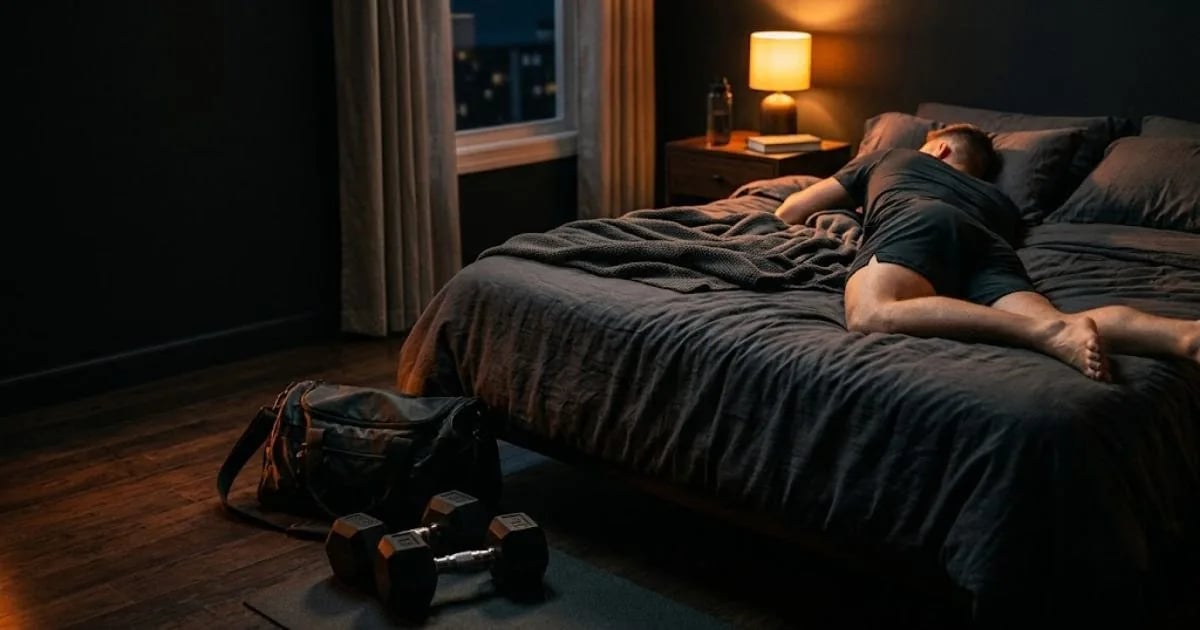
Why sleep builds muscle just as much as training
When people ask me how to grow faster, they expect me to talk about heavier weights or more sets. In reality, one of the first things I look at is sleep. Sleep builds muscle in a very literal way: the hard work you do in the gym is only the signal, and the actual repair and growth happen while you rest. In my work with clients in Sarajevo and online, the person who trains four solid days and sleeps well almost always out-progresses the person who trains six days and sleeps five hours.
Training breaks muscle tissue down. Your body then rebuilds it slightly stronger, and the bulk of that rebuilding happens during deep sleep. That is when the body releases most of its growth hormone, when protein synthesis runs at its highest, and when your nervous system recovers from heavy lifting. Skip the sleep and you keep asking for a result you never give your body the chance to produce.
What happens to your body while you sleep
Sleep is not one flat state. It cycles through lighter stages and into deep, slow-wave sleep, then into REM sleep, several times a night. Each stage does a different job.
- Deep sleep is where most physical recovery happens: tissue repair, hormone release and muscle rebuilding.
- REM sleep supports the nervous system, memory and motivation, which matters more than people think for staying consistent.
- Hormonal balance shifts overnight: sleep helps keep testosterone, growth hormone and cortisol in a range that favours building muscle rather than losing it.
When you cut sleep short, you cut into the deep stages first. That is exactly the part you cannot afford to lose if your goal is building muscle or losing fat while keeping the muscle you already have.
How much sleep do you actually need
For most active adults, I aim for seven to nine hours per night. If you are training hard, closer to eight or nine is where you feel the difference. Beginners often need the higher end because their bodies are adapting to a completely new stress.
Signs you are not getting enough
- Strength stalls even though your program is sound.
- You feel flat, unmotivated or irritable before sessions.
- You are constantly hungry, especially for sugar and quick carbs.
- You catch every cold going around and feel run down.
If two or three of these sound familiar, sleep is usually the lever to pull first, before you change anything about your program. This is one of the things I plan for from day one, the same way I plan the training itself, because a plan that ignores recovery is only half a plan.
Sleep, fat loss and appetite
Sleep does not only affect muscle. It has a direct hand in fat loss, mostly through appetite. Research shows that short sleep pushes hunger hormones up and fullness hormones down, so you feel hungrier and less satisfied on the days after a bad night. You are not weak-willed when you raid the fridge at 11pm after four hours of sleep, your biology is simply working against you.
On top of that, poor sleep makes you crave fast energy: sugar, refined carbs, caffeine. Fix the sleep and a lot of the "willpower" problems around food quietly solve themselves. This is why, when a client tells me their nutrition falls apart in the evenings, I ask about their sleep before I touch their meal plan.
How to actually sleep better
You do not need a perfect routine, you need a few reliable habits. These are the ones I give clients first because they give the most return for the least effort.
Build a simple wind-down
- Keep a consistent schedule. Same bedtime and wake time, even on weekends. Your body loves rhythm.
- Get bright light early. Daylight in the morning sets your clock and makes the evening tiredness arrive on time.
- Dim the evening. Lower the lights and cut screens in the last 30 to 60 minutes. Bright screens tell your brain it is still daytime.
- Watch caffeine timing. Coffee in the afternoon can still be in your system at bedtime. Move your last cup earlier and see what changes.
- Keep the room cool and dark. A slightly cool, dark, quiet room helps you fall into the deep stages faster.
If you train late in the evening, give yourself a buffer. A hard session raises your heart rate and adrenaline, so finishing right before bed can keep you wired. A gentle walk, a warm shower and lower lighting help the switch flip.
A simple weekly sleep check
I like giving clients a quick self-check rather than obsessing over sleep-tracker numbers. Each morning, ask two questions: did I fall asleep within a reasonable time, and did I wake up feeling like I actually rested? If you can answer yes most days of the week, your sleep is supporting your training. If not, that is your first project, ahead of adding volume or chasing a new program.
One thing I want to be honest about: you cannot out-supplement bad sleep, and you cannot out-train it either. No pre-workout, no extra set and no clever split makes up for chronically short nights. Recovery is where the results are cashed in, which is exactly why I treat sleep and rest as part of the program, not an afterthought. If you want to go deeper on that side, read my guide on recovery after training.
Common sleep mistakes I see
Even people who value sleep often sabotage it without realising. These are the patterns I correct most often with clients.
- Chasing lost sleep on weekends. Sleeping until noon on Saturday to repay a week of short nights throws off your rhythm and makes Monday worse. A steady schedule beats the crash-and-catch-up cycle every time.
- Heavy late-night meals. A very large meal right before bed can disrupt the deep stages of sleep. If you train late and need to eat after, keep it moderate and protein-focused.
- Doom-scrolling in bed. The bright screen and constant stimulation keep your brain alert exactly when you want it winding down. Charge your phone across the room.
- Too much late caffeine or alcohol. Both feel harmless but quietly wreck sleep quality. Alcohol may help you fall asleep faster but ruins the deep, restorative stages.
None of these require willpower to fix, just awareness. When I coach someone whose progress has stalled, we often find one or two of these habits quietly stealing their recovery night after night. Remove them and the training they are already doing starts to pay off.
Putting it together
Here is the short version I want you to remember. Your training sets the direction, but sleep builds muscle and protects the muscle you have while you lose fat. Aim for seven to nine hours, keep your schedule steady, respect the evening wind-down, and treat a bad week of sleep as a signal to recover rather than a reason to push harder. Do that, and the same training you are already doing will start paying off faster.
When I build a plan for someone, I do not just hand over sets and reps. I look at how they sleep, how they recover and how their real life fits around training, because that is what makes results last. If your progress has stalled and you suspect recovery is the missing piece, that is exactly the kind of thing I help people fix. You can see how I approach it at tvojtrener.ba.
Training works best when it is built around you - your goals, your schedule and your current level. I have spent years coaching people in Sarajevo and online across Bosnia, helping them make a change that actually lasts. If you want a plan made specifically for you, see how I work and get in touch.
FAQ
- Does sleep really build muscle?
- Yes. Training is the signal, but the actual muscle repair and growth happen while you rest, mostly during deep sleep. That is when your body releases most of its growth hormone and protein synthesis peaks, so poor sleep directly slows muscle growth.
- How many hours of sleep do I need to build muscle?
- Most active adults do best on seven to nine hours per night, with the higher end being ideal when you train hard. Beginners often need more because their bodies are adapting to a new training stress.
- Can lack of sleep affect fat loss?
- It can. Short sleep raises hunger hormones and lowers fullness hormones, so you feel hungrier and crave quick sugar and carbs. Fixing your sleep often solves a lot of evening food problems on its own.
- I train late at night, how do I still sleep well?
- Give yourself a buffer after training. A gentle walk, a warm shower and dimmer lighting help lower your heart rate and adrenaline so you can wind down and fall asleep more easily.